Have you also encountered situations where you use a circuit resistance measuring instrument that claims to be accurate, but the measurement results are always a bit "unpredictable"? Don't rush to doubt the instrument itself, sometimes the root of the problem may lie in these small details you overlook. Today, let's talk about how to make your circuit resistance measuring instrument read more reliably.
What is circuit resistance? Why is it so important?
Simply put, loop resistance refers to the total resistance encountered by current flowing through a complete electrical circuit (starting from the power source, passing through the load, and then returning to the power source). This value may seem insignificant, but it directly relates to the operational efficiency, safety performance, and even lifespan of the equipment. Imagine if the resistance of a connection point is too high, like a stone in a water pipe, it will hinder the smooth flow of current, resulting in energy loss (heating), which can affect equipment performance in mild cases, and may cause safety hazards such as overheating or even fire in severe cases.
The 'mastermind behind' affecting circuit resistance measurement
The measurement of circuit resistance is not fixed, and various factors can interfere with its accuracy:
Contact resistance: This is one of the most important factors affecting circuit resistance. Oxidation, dirt, and loose crimping at wire connection points (such as terminals, circuit breaker contacts, clamps, etc.) can significantly increase contact resistance.
Wire cross-sectional area and material: The thicker the wire, the lower the resistance; The material of the wire (such as copper having a lower electrical resistivity than aluminum) will also directly affect the total resistance.
Environmental temperature: The resistivity of most materials increases with increasing temperature. During measurement, changes in ambient temperature can cause slight fluctuations in readings.
Measurement method and instrument accuracy: It is crucial to choose the appropriate measurement method and ensure that the circuit resistance measuring instrument used has high accuracy and stability.
Mastering the Measurement Tool: Solution from Wuhan UHV Power Technology Co., Ltd
In practical work, we need to rely on professional circuit resistance measuring instruments to accurately measure. These instruments usually use the four wire measurement principle, which can effectively eliminate the influence of test lead resistance on the measurement results, thereby obtaining more accurate readings.
The principle of the four wire method: Apply a constant current through two leads, and measure the voltage drop through the other two leads. In this way, only the voltage across the tested resistor is measured, avoiding interference from lead resistance on the measurement results.
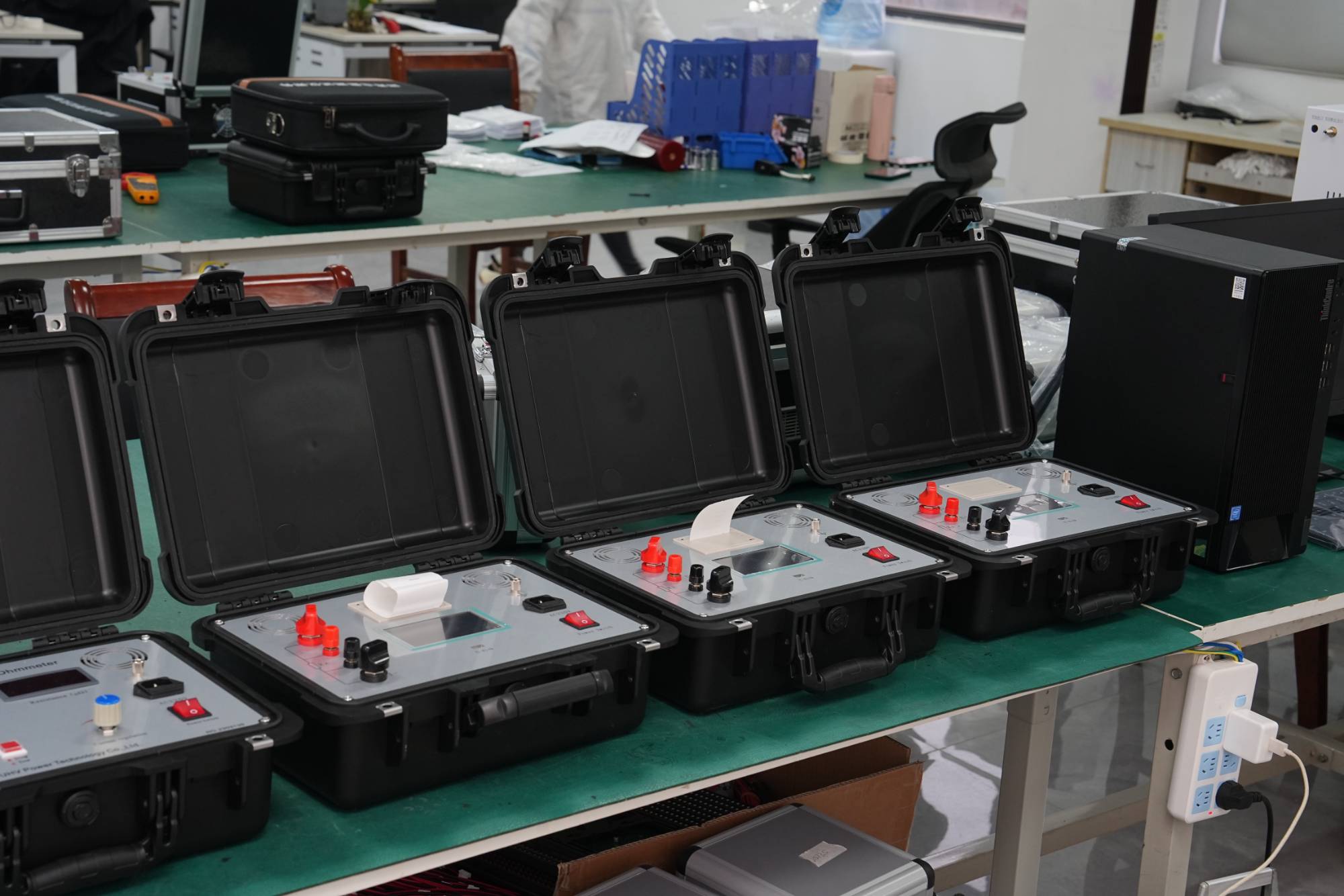
Instrument selection: There are many excellent circuit resistance measuring instruments on the market, such as Wuhan UHV Power Technology Co., Ltd. which provides a series of high-quality power testing instruments. Their instruments have good performance in accuracy, stability, and usability. Choosing an instrument that meets your job requirements is the first step in ensuring measurement quality.
How to 'do better'? Practical suggestions
Clean connection points: Before measurement, be sure to carefully clean the surfaces of all connection points to remove oxide layers and dirt.
Ensure secure crimping: Check all connection points for secure crimping and re tighten if necessary.
Standardize lead connection: Ensure good contact between the test lead and the tested point, and clamp tightly when using the clamp.
Choose the appropriate gear: Based on the expected resistance value of the tested circuit, select the appropriate measurement gear for the instrument.
Multiple measurements and taking the average: If conditions permit, multiple measurements can be taken at the same location and the average can be taken to improve accuracy.
Pay attention to temperature effects: If the ambient temperature changes significantly, consider recording the temperature during measurement and refer to the instrument manual for temperature correction methods.
By paying attention to these details and using high-precision circuit resistance testers provided by professional manufacturers such as Wuhan UHV Power Technology Co., Ltd., you will definitely be able to confidently measure circuit resistance and safeguard the safe and stable operation of power.
Frequently Asked Questions (FAQ)
Q1: How often should I measure the circuit resistance? A1: It depends on the specific application scenario and the importance of the device. It is usually recommended to conduct measurements during equipment installation, maintenance, and repair. For critical equipment, routine inspections can be conducted regularly.
Q2: Why does my circuit resistance measuring instrument display "open circuit"? A2: "Open circuit" usually means that there is an open circuit point in the tested circuit, or that the contact resistance is too high to allow current to flow. Please carefully check the wire connections, circuit breaker status, and contact condition of each connection point.
Q3: What are the effects of current magnitude when using a circuit resistance measuring instrument? A3: The magnitude of the measured current can affect the actual resistance value of certain contact points (for example, larger currents may "burn through" the oxide layer, temporarily reducing the contact resistance). It is important to choose the recommended measurement current for the instrument and maintain current consistency in the same circuit measurement.
Q4: What is the essential difference between four line measurement and two line measurement? A4: The four wire method eliminates the influence of test lead resistance on measurement results by independently testing current and voltage circuits, making it particularly suitable for low resistance measurements with much higher accuracy than the two wire method.
Q5: Why is my instrument reading always unstable? A5: Unstable readings may be related to poor contact at the measuring point, unstable lead connections, drastic changes in ambient temperature, or problems with the instrument itself. Please investigate one by one.